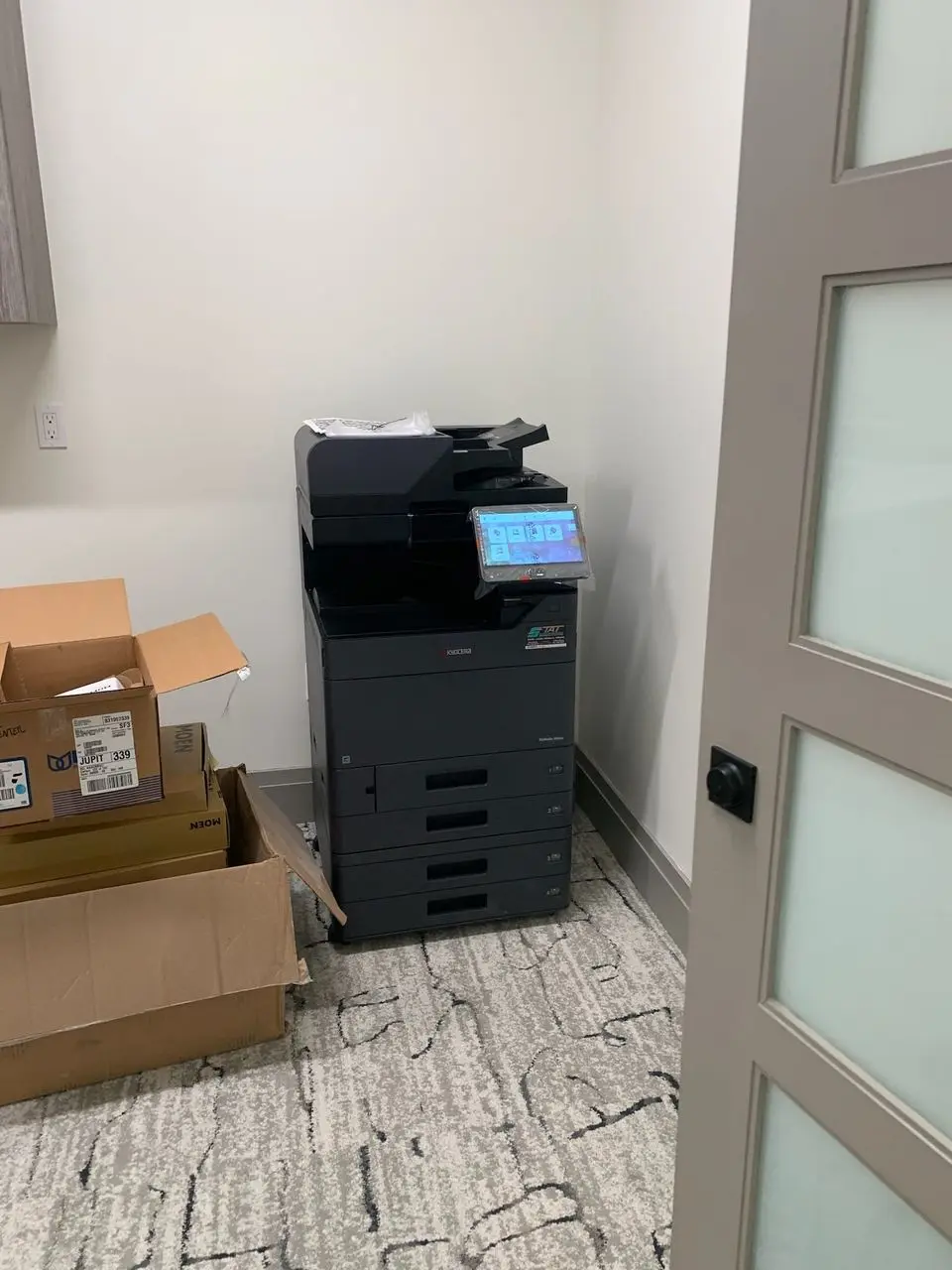
A copier invoice is easier to review when you can connect each charge to a machine, a date range and a written agreement. That sounds straightforward until equipment financing, maintenance and extra pages appear on different bills. A short monthly reconciliation gives your office a clear record without turning the office manager into a lease specialist.
Start with the device and billing period
Record the serial number and office location shown on the invoice. Then compare them with your equipment register. This is particularly useful when a South Florida business has changed offices or replaced a machine: an old device description may still look familiar enough to pass a casual review.
Check the opening and closing dates. A calendar-month report from your copier may not cover the same period as the service invoice. Do not label a difference an overcharge until the periods and meter definitions match.
Separate the equipment payment from usage
Keep the financing invoice and service agreement side by side. Identify the fixed equipment payment, the service minimum or included volume, and any usage charges. Delivery, taxes, accessories and other line items should be checked against their own supporting documents rather than folded into an assumed cost per page.
The equipment lease and maintenance agreement may be separate. Our copier leasing guide explains why both documents belong in a comparison. The terms you signed determine how your bill is calculated.
Build a simple reconciliation row
For each device, keep these fields in a spreadsheet:
- Billing dates, serial number and invoice number.
- Opening and closing black-and-white and color readings.
- How the agreement defines a billable page or impression.
- Included allowance, overage rate and billed overage.
- Explanation of credits, adjustments or estimated readings.
- Name of the person who reviewed an unresolved difference.
In a hypothetical example, a meter increases by 4,200 billable impressions during a matching period. If that agreement includes 4,000 impressions, the arithmetic difference is 200. Whether those 200 create an overage depends on the contract, including any pooling or minimum-charge rules. This example is not a quote or a statement of Gold Coast pricing.
Ask a focused question when something differs
Send the invoice number, device serial number, relevant readings and your calculation through the provider's approved support channel. Ask which reading or contract term explains the difference. Avoid sending documents printed by the machine; their contents are not needed to reconcile a meter.
Also ask how blank pages, duplex output, large paper and automatic color detection are treated. The answer can differ by agreement and equipment. A two-sided sheet is not automatically one billable impression.
Use the pattern to plan, not just dispute
Keep several comparable periods before changing the allowance. A one-time packet or busy month may not justify a larger commitment. Repeated unused allowance or recurring overage is a useful reason to review the next proposal with actual numbers.
If you are comparing a replacement, STAT's copier leasing checklist covers the equipment and service details to request. Bring your reconciled usage history to the conversation so the next recommendation reflects how your office actually works.